Confronting the Housing Crisis: A Conversation with Jeff Francisco
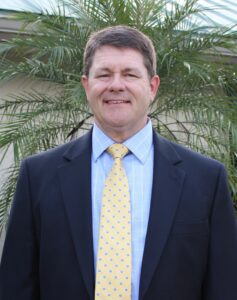
If there’s something Jeff Francisco doesn’t know about housing in Indian River County, it probably hasn’t happened or can’t be known. As Chief Strategy Officer at Indian River Habitat for Humanity, President of the Board of Coalition for Attainable Homes, Treasurer of Homeless Services Council, and nonprofit affordable housing representative on the county’s Affordable Housing Advisory Committee, he is uniquely positioned to understand the county's housing crisis.
According to Francisco, the biggest need in this county, out of all human services, is affordable rentals. “It’s not even close,” he says. “It’s number one, and number two is so far down the list you can’t even see it back there.”
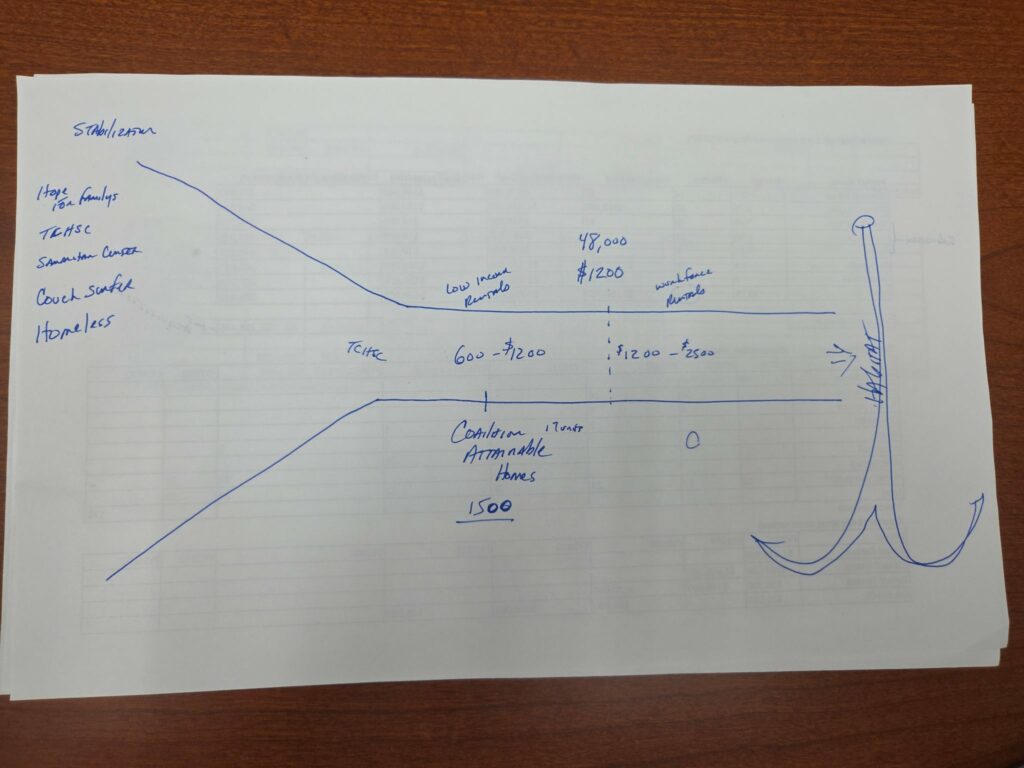
Francisco grabs a pen and diagrams a pipeline to illustrate how families might move through a functioning housing continuum. Picture a funnel, or a child’s drawing of a rocket tipped on its side. To the far left, at the wide end of the funnel, are the families in need of immediate stabilization. These are the folks who are homeless, reside in shelters, or, in increasing numbers, are couch surfing.
Their first step toward stability would be low-income rental housing, which Francisco describes as units renting for six hundred to twelve hundred dollars. Many of these rents are subsidized by government programs, such as Housing Choice vouchers, low-income tax credits, or Homeless Service Council's HUD-funded programs. Wait lists are long, and the shortage of these units in our county means that for many of these people, housing remains precarious.
Moving to the right through the pipeline, beyond the low-income rentals, Francisco draws a dotted line and labels it forty-eight thousand dollars, the minimum income needed to make rent of twelve hundred dollars affordable, or equal to no more than thirty percent of income. Housing stability, or “permanence,” he says, begins here, with rentals charging up to twenty-five hundred dollars that are affordable to people with incomes between forty-eight and one hundred thousand dollars.
This space represents housing where our community’s service workers, teachers, healthcare workers, and public safety officers could find stable housing without having to commute from neighboring counties. Unfortunately, these units are in short supply as well. “There’s no one here,” Francisco says, referring to developers of affordable multifamily units for the workforce. Newer construction skews toward higher-priced apartments, and scarcity continues to drive prices up. “In a healthy, balanced economy in a healthy, diverse community…there should be room for you to live here,” Francisco says. Ideally, people could rent for a few years, and then if they wanted, move toward home ownership with a Habitat home, represented in the diagram by an anchor at the far right of the pipeline.
There’s no comfort in the knowledge that we’re not alone. The shortage of low-income and workforce housing are national problems, decades in the making. Trevor Loomis, President and CEO of Indian River Habitat for Humanity, explains that even “if everything goes right, it will take two more decades” to catch up to the building shortfall that dates to the 2006 housing crisis.
It would be easy to shrink from the size of the task, but Francisco, whose faith drives what he does, knows he was called here. He remembers a former mentor telling him that sometimes “you just have to choose to die on that hill.” He explains, “That’s the way we’re going to have to be about affordable housing. There’s no one agency that’s going to get us out of this—it’s going to take everything everybody’s got pulling together to get us out.”
For Habitat, that means building homes. As Francisco explains, “we sell houses at cost at zero percent interest” to qualified buyers, who contribute three hundred hours of “sweat equity,” attend classes, and meet savings goals. More than 550 people in Indian River County live in Habitat homes. Twenty-nine houses are currently in progress, and thirty-seven homebuyers are working their way through the program, with more ready to join them shortly. By 2032, 170 units already in the queue will be completed. These neighborhoods of single-family homes, like the fourteen-unit Gifford Gardens slated to be finished this December, or the thirty-two homes to be built at Citrus Crossing, represent typical Habitat projects.
Francisco and Loomis, though, are constantly searching for creative opportunities to do even more. On one large piece of land, Habitat built a three-bedroom house currently being used as low-income rentals by Homeless Services Council. The second home on the site will be sold at cost to Coalition for Attainable Homes to provide rental housing for four veterans, each with their own bedroom and bathroom, lockable storage space, and individual pantries in a shared kitchen. The Pennwood Motor Lodge project currently underway in Sebastian will further amplify Habitat’s impact, providing forty-eight low-income rentals for seniors.
What those creative projects have in common is rich collaboration across agencies that enables outside-the-box thinking. “We have agents of change all over this county,” Francisco says. He calls it “divine synergy” that has brought leaders such as Loomis, Matt Tanner at United Against Poverty, Rayme Nuckles at Homeless Services Council, and Marty Mercado at Hope for Families Center to town at the same time. All of them, he explains, are deeply committed to working together. As Chief Strategy Officer, Francisco “sets the table” for collaboration. He “makes sure the right people are at the right tables talking to each other the right way.”
The housing shortage in Indian River County is a crisis, but it’s not hopeless. Francisco is confident the people who can take the community to the next level are in place, both in nonprofit leadership and key county positions. “This is a special moment in time for this county,” Francisco says. “The table is set for a twenty-year run” requiring “an all-out sustained effort with consistency to keep the same people in the same seats to build the relationships, and we’ve got it. It’s set, and we’re starting to see dividends already.”
People like Jeff Francisco and an expanding network of collaborators are working hard on housing, building a future where the people who work in Indian River County will be able to call this community home.