It's Everyone's Job to End Homelessness. That's the Problem.
Imagine a cruise ship sinks off the coast at Riomar and leaves five thousand people flailing in the water. Everyone with a boat rushes to the beach to help. Soon the water is filled with fishing boats, jet skis, kayaks, and cruisers. The Coast Guard arrives with a rescue ship and can barely find room on the beach to launch. The chaos in the water makes it hard for them to spot the people who are most at risk of drowning.
All the rescuers are working as hard as they can, but the clock is ticking, and it’s clear there aren’t enough boats to get everyone out of the water.

What can you do when you know the need is bigger than the resources available to solve it? How can you be sure the people who need help most urgently are the ones who get it?
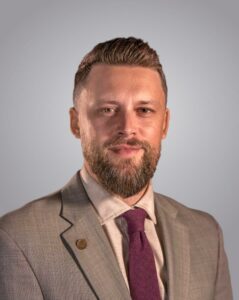
That’s the problem people like Marty Mercado, Executive Director of Hope for Families Center and Matt Tanner, Executive Director of United Against Poverty, encounter every day. They aren’t alone. Leaders of dozens of other agencies working to keep people housed and end homelessness in Indian River County face the same question.
The obvious solutions are long-term: Increase the supply of available low-income and workforce housing and attract higher-paying jobs to close the gap between incomes and rents. But people living in shelters or hotels or cars or camps can’t afford to wait for future solutions. They need help now.
That’s why Mercado and Tanner have been working in conjunction with Treasure Coast Homeless Services Council (TCHSC) for the past two years to change the way housing assistance resources are allocated.
Today, there are dozens of nonprofit organizations in Indian River County charged with helping prevent homelessness. They are joined by numerous other agencies, including the county’s Human Services division, the sheriff’s department, the school district, homeless shelters, and local hospitals. Together, they comprise the Continuum of Care (CoC), which is led by Treasure Coast Homeless Services Council (TCHSC).
Most, if not all, these organizations have case workers who work with families one-on-one to help them resolve immediate crises and remove barriers to achieving self-sufficiency. Informally, many of them reach out to colleagues at other agencies to share ideas and search for resources.
This abundance of helpers is a good thing, but currently, there’s no way to ensure that those receiving help first are the ones who need it most desperately.
Coordinated Entry (CE) is designed to change that. At its heart, it requires a shift from an agency-focused model to a community-focused one. The impetus to improve the system came at a TCHSC board meeting when Tanner and Mercado found themselves in a working group together. “While waiting for things to happen that are out of our control, we decided to focus on what we can control,” Tanner explains.
What came next was almost two years of work fleshing out the idea, explaining it to community stakeholders, and studying best practices across the country. To date, more than forty organizations across the three counties covered by our CoC (Indian River, St. Lucie, and Martin County) have attended at least one meeting, with twenty of those people representing agencies in Indian River.
On February 26, Mercado convened a “listening session” of members of the CoC. In it, Rayme Nuckles, visionary leader of TCHSC, explained, “Coordinated Entry isn’t optional—it's a HUD-required system designed to ensure that people experiencing homelessness receive equitable access to housing resources regardless of where they first seek help.”
For it to work, CoC participants will need to develop and agree on standardized assessment tools. Anyone looking for help, regardless of whose door they knock on, will be asked the same questions. Their answers will be recorded in the centralized Homelessness Management Information System (HMIS) hosted by HSC. According to Nuckles, “This will ensure that resources go to those with the highest needs first, rather than those who are best at navigating bureaucracy or who happened to call at the right time.” It also solves the problem of clients having to repeatedly tell their stories, reliving their trauma each time. Coordinated case conferencing meetings will bring people from multiple agencies together to collaborate on particularly difficult cases.
According to Janice Miller, Senior Housing Associate for the consulting group Technical Assistance Collaborative, the process also involves pooling housing resources with “low barrier” policies; in other words, having a consolidated list of housing units available from all sources that can be moved into quickly, without the landlord or housing agency creating additional hurdles. The idea is to quickly match the most vulnerable individuals to housing that meets their needs and can be readily moved into.
While there is still much work to be done before all the benefits of a streamlined coordinated entry process can be realized, Mercado believes that “When implemented well, CE reduces the time people spend homeless, eliminates duplicated assessments across multiple agencies, and ensures that limited housing resources reach those who need them most urgently.” Tanner expects the system to be implemented in at least a beta mode sometime this year.
Coordinated Entry won’t magically resolve the multi-faceted housing crisis in our area. But there is something inherently powerful in uniting the efforts of an entire community to solve one of our biggest, stickiest problems.
The Treasure Coast is full of people willing to drag their boat to the beach to rescue people in need. Coordinated Entry can make sure they're all rowing in the same direction.