"NSPIRE"ing Work
Gil Plourde might just be the most important county employee you’ve never heard of. Plourde works in the Housing Services Division as Indian River County Housing Inspector for the Housing Choice Voucher (HCV) and Veterans Affairs Supportive Housing (VASH) programs.
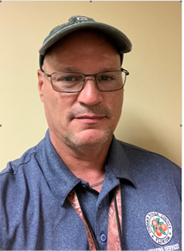
These two U.S. Department of Housing and Urban Development (HUD) programs are administered by the county in its role as Public Housing Agency. The programs provide vouchers to individuals meeting specific income criteria based on Area Median Income, a number HUD publishes annually. The programs are designed to help people whose incomes are extremely low (up to 30% AMI), very low (50% AMI), and low (<80% AMI). Once qualified, program participants will generally spend no more than 30% of their income on rent.
HUD (via the county) funds the remainder, called the Housing Assistance Payment (HAP). The total payment must fall within 90 - 110% of Fair Market Rent, according to another schedule HUD publishes annually. As of October 1, 2025, Fair Market Rent for a 2-bedroom home in Indian River County is $1,604.
Once an individual qualifies for a voucher, they have sixty days to find a home and can request one potential thirty-day extension if needed. The county helps by providing a list of properties that have already been approved for voucher recipients, but these frequently come with long waiting lists. A voucher holder is free to select a place that isn’t on the list, assuming it passes Plourde’s pre-move-in inspection. “If they pass,” he explains, “they get an owner’s packet.” If not, the tenant can’t move in until the owner corrects the problems.
Plourde inspects the units again eight months later, then annually when a tenant’s lease is up for renewal. He follows National Standards for the Physical Inspection of Real Estate, or “NSPIRE” guidelines, which provide a detailed list of sixty-three major standards, including things like HVAC, electrical, water heater, smoke detector, and more. Within each standard, potential “deficiencies” are listed—items such as “Ceiling has a hole,” or “Entry door cannot be secured,” or “extensive rat infestation”—to mention just a few. Each deficiency receives a “Health & Safety Designation,” ranging from “life threatening” to “low,” with corresponding timeframes for correction—twenty-four hours for dangerous conditions to thirty days for less serious problems. Plourde appreciates the objectivity the standards provide. “It’s never personal,” he explains.
He should know. He’s been involved with HUD properties since he was ten years old. His mother managed a HUD property, and his father was the maintenance supervisor. Plourde mowed the grass and helped with odd jobs, then became a maintenance supervisor himself after high school, ultimately becoming senior maintenance supervisor for thirteen HUD-based properties. “I was inspected for years on the things I’m inspecting units on now,” Plourde says.
Last year, including preliminary-, annual-, special-, re-, and tenant-requested inspections, Plourde was inside homes making sure they were up to standard 543 times. The landlords whose properties he inspects admire his professionalism. Keisha Martin, manager of two residential properties where approximately eighty voucher holders live, explains how she inspects the properties carefully before Plourde ever arrives. “If there’s even a tiny tear in a carpet, Gil will let me know it’s a trip hazard,” she says, adding, “We really respect Gil.”

That sort of respect provides invaluable protection to the tenants in those units. The relationships Plourde builds with both landlords and renters allow him to intervene as a useful intermediary when there’s a problem. Rather than living with a deficiency, a tenant can “call Gil.” Most often, he can leverage the relationship he’s built to resolve the problem amicably. When that’s not possible, he has the power to withhold the HAP payment, without putting a tenant in danger of facing an eviction. Landlords who consistently fail to meet their responsibilities can be removed from the county’s approved listing. His work helps restore the power imbalance between owners and renters and provides the sort of mediation needed to keep vulnerable people housed.
Plourde’s job description doesn’t stop at performing inspections. He is also in charge of making sure rents remain reasonable for the properties where voucher holders live. When an owner wants to increase a tenant’s rent, Plourde performs a rent-reasonableness survey, comparing prices within a two-mile radius. Last year, he did this 1,125 times. He always, he says, “negotiates down, to preserve more funding to help the next person.”
Unfortunately, there are limits to the number of people Plourde can help. HUD determines the number of vouchers an area receives. Today, Indian River County manages 351 HCVs and fifty-nine VASH vouchers. If you don’t already have a voucher, it can take years to get one. The waiting list in Indian River County was closed for most of the past five years. When it opened for new applicants for just one day last spring, more than eleven hundred people applied.
Additionally, once a person receives a voucher, finding an affordable place to rent can be difficult. The places on the county’s approved list have waitlists of their own. Plourde is doing what he can to help in this area as well. He’s constantly “looking for buildings,” searching for new properties he can bring into the program. Last year, he onboarded seventeen of them—one duplex and sixteen single family homes.
There’s one other major limit to the number of people Plourde can help. There are more than 14,000 renters in Indian River County. Many of those who can’t afford to pay market rent live in units that received public subsidies to build low-income or affordable housing. Still others rent unsubsidized units from whomever they can find. Sometimes Plourde receives calls from these renters whose friends have told them, “Call Gil, he can help.” Unfortunately, if that caller isn’t in the HCV or VASH voucher program, (and remember, there are only 410 vouchers in the county), there is nothing he can do.
That’s an important distinction. Horror stories about people living in substandard housing made it into the minutes of the April 2025 county’s Affordable Housing Advisory Committee (AHAC) meeting. County Commissioner Susan Adams described a long-standing “problem with rental units that were in deplorable shape and people being taken advantage of and being charged astronomically and then really not having an option but to put up with it.”
You won’t find that on Plourde’s watch. His competence, dedication, and professionalism make him the sort of civil servant we can all be proud of. “This is the least amount of money I’ve made since I was nineteen years old,” Plourde says, “but it’s the most gratifying work I’ve ever done.” If you want to make his day, call him with a lead on a duplex, or maybe 150 of them.