Radical Hospitality: Opening Your Home and Your Heart
Imagine the following scenario: A pregnant woman living in her car gives birth at the local hospital. She is on a waiting list for a homeless shelter, but there won’t be space available for a few weeks. The hospital can’t send a newborn home with a homeless woman, so they contact the Department of Children and Families (DCF), and the child enters the foster care system. The trauma of separation for both mother and child begins. Efforts to reunite the family become entangled in the legal system, where the national average of families who are reunited hovers around fifty percent.
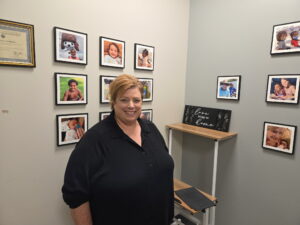
Now imagine a different scenario: Instead of calling DCF, the hospital calls someone like Ana Ruleman, family coach supervisor and intake specialist for the Treasure Coast chapter of Safe Families for Children. Founded in Chicago in 2003, the organization now has chapters in more than 150 cities in thirty states, as well as global locations throughout Canada, the UK, South America, Western Europe, Southeast Asia, and Australia. Its primary mission is to keep children safe from abuse and neglect while keeping families intact. It boasts a ninety-eight percent “family preservation” rate.
Safe Families can rewrite the ending to stories like the one above. When the hospital contacts Ana Ruleman, she reaches out to her network of volunteers. Her first call is to a “family host,” a volunteer family willing to provide a temporary home for the baby during the crisis period. To qualify as a host family, volunteers undergo the same security clearances as foster families. Safe Families also interviews three unrelated family references and conducts a home safety inspection.
Having secured a temporary safe space for the child, Ruleman’s next step would be to create a “Circle of Support” for the new mother. She would connect her with a “Family Coach,” who would act as a friend and mentor and help her establish goals. Ruleman would then match the family with “Family Friends,” who could step in as needed to provide help, while “Resource Friends” would be available to meet the immediate needs of either the host family or the mom.
By the time the new mother is reunited with her baby at the shelter, she is no longer isolated. She has a family coach and several family friends in her circle. The parent identifies her goals, and the coach helps the parent implement action plans and access resources. The family friends might help with childcare, pick children up from school, or simply get together to talk or share play dates with their own children. “The goal is long-term sustainability,” Ruleman explains. By the time the family leaves the shelter, they have a support system in place to help them face the next set of challenges.
Jessica Staudt, Chapter Director for the Treasure Coast, explains that the organization helps people who are at risk of homelessness, already experiencing homelessness, undergoing a short-term crisis, or simply disconnected from support systems. These are generally families that “have no local support and no margin for error.” In Indian River County, the organization has helped eighty-six children and forty-four adults, providing 129 nights of housing to nineteen children. One hundred percent of them have been reunited with their families.
People in need are referred to the organization by homeless shelters like Hope for Families Center, organizations that support expecting families like Healthy Start, Care Net, or the Buggy Bunch, and even by DCF. As a faith-based organization, Safe Families volunteers often come from local churches, although anyone who resonates with the organization’s core values can volunteer.
Those values include radical hospitality, disruptive generosity, and intentional compassion.
Volunteer Libby Sanderson has served as a host family several times and acted as a family friend. After Roe v. Wade was overturned, she took to heart the criticism that people cared more for the unborn than for children as they grew up. She learned about radical hospitality when she opened her home to a three-year-old boy for two and a half weeks over Christmas.
“It was hard,” she admits and “exhausting.” For homeless children, she explains, “Home is mom,” and now she and her husband were caring for a child whose routine had been disrupted and who wasn’t sleeping. After he was reunited with his family, though, she opened her home again to two children who stayed for two weeks. Then, having embraced radical hospitality as a family value, she welcomed a teenager who now lives with them permanently. “It will change you in ways that are beautiful,” she says, describing herself as more grateful and more compassionate than she was before she opened her home.
Ana Ruleman has been practicing radical hospitality for decades. As a single woman working at a radio station, she watched as a co-worker reached out to her married colleagues when he needed help finding a home for a five-year-old. When all of them had refused, he turned to her, and she said yes. She was living with her sister at the time. They took care of the boy for a year, and then, she says, “He went home and I thought I was going to die. It was so hard.”
An attorney involved in the boy’s case told her she had another child who needed a home, then six months later there were two more. Fast forward some twenty years and Ruleman and her sister together had fostered more than 300 children.
She was intrigued by Safe Families as soon as she heard about it but couldn’t find a chapter near her home in Virginia. She decided to follow her brother to Florida and began volunteering in early 2021. “This is such a better model” than the foster system, she explains, “because the best way to help the children is to help the parents get stable and keep the family together.”
While she still “does all the things” she did as a volunteer like befriending families, picking kids up from school, or talking to someone who needs a break, in her current role she intakes new families into the program and creates circles of support, matching families with coaches and other volunteers, then checking in with the coaches weekly. “We really want this to be a reciprocal relationship,” Ruleman explains. "We value them as people and families.”
That reciprocity is evident in Ruleman’s own experience. “I have so many friends,” she says, “that started out as families in crisis.” She describes a woman she met at Hope for Families Center who needed someone to watch her kids when she went into labor. “She’s the most positive person,” Ruleman says. “We still meet for breakfast.” She describes an autistic teenager, who “comes over and hangs out with her children,” and a woman who invited her to Christmas dinner at her church.
Ruleman knows that “compassion fatigue,” the exhaustion that often afflicts people who spend their careers working to alleviate other people’s suffering, is real; she just doesn’t experience it. “We have the opportunity to build relationships,” she says. “There are so many great days. Everybody encourages everybody and keeps everybody going. That’s why it’s so energizing.”
People who hear about Safe Families “catch the vision,” she says. Currently, there are ninety-nine volunteers on the Treasure Coast and three partnerships with local churches. With so many families in need of support, she hopes you’ll consider joining them.