Samaritan Center, A Good Neighbor for Homeless Families
It’s surprisingly quiet at The Samaritan Center on a rainy Wednesday morning. The two-story great room in the center, decorated with couches and café tables, serves as the facility’s heart. Offices, a kitchen, and family living spaces flank the perimeter.
The Samaritan Center exists in the space between emergency shelter and independent living, serving homeless families in Indian River County as they move from crisis to stability. It is one of twelve social service programs operated by Catholic Charities across five counties in the Diocese of Palm Beach, and the only shelter. Catholic Charities CEO Ellen Wayne calls it the “crown jewel” of the diocese.
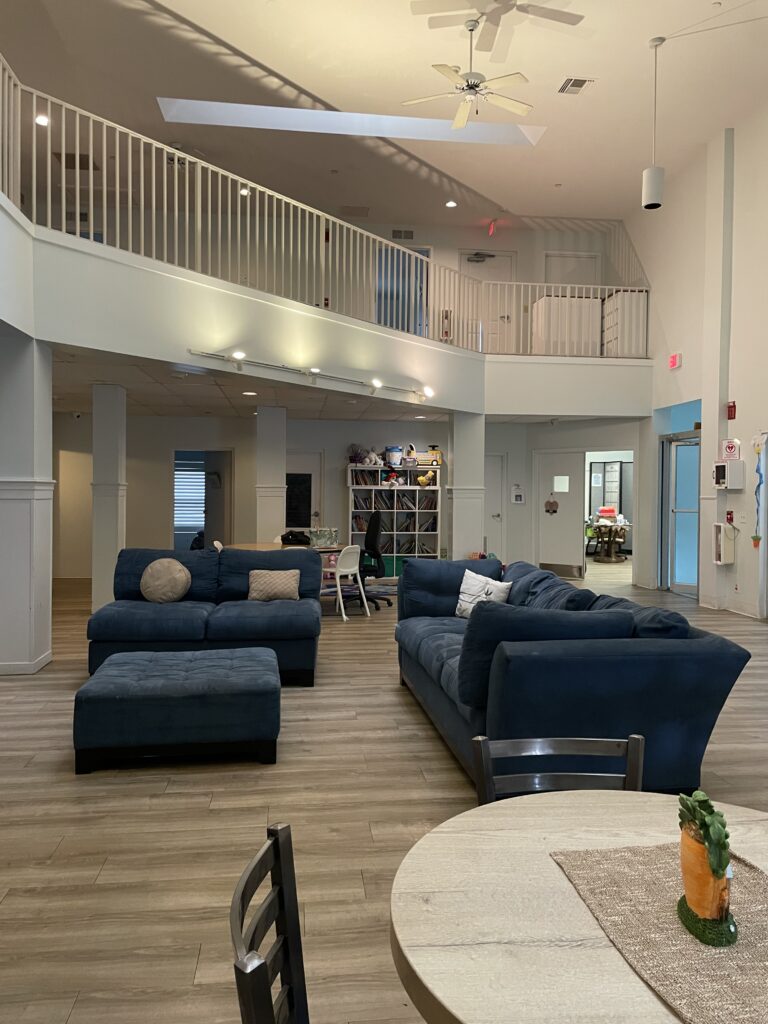
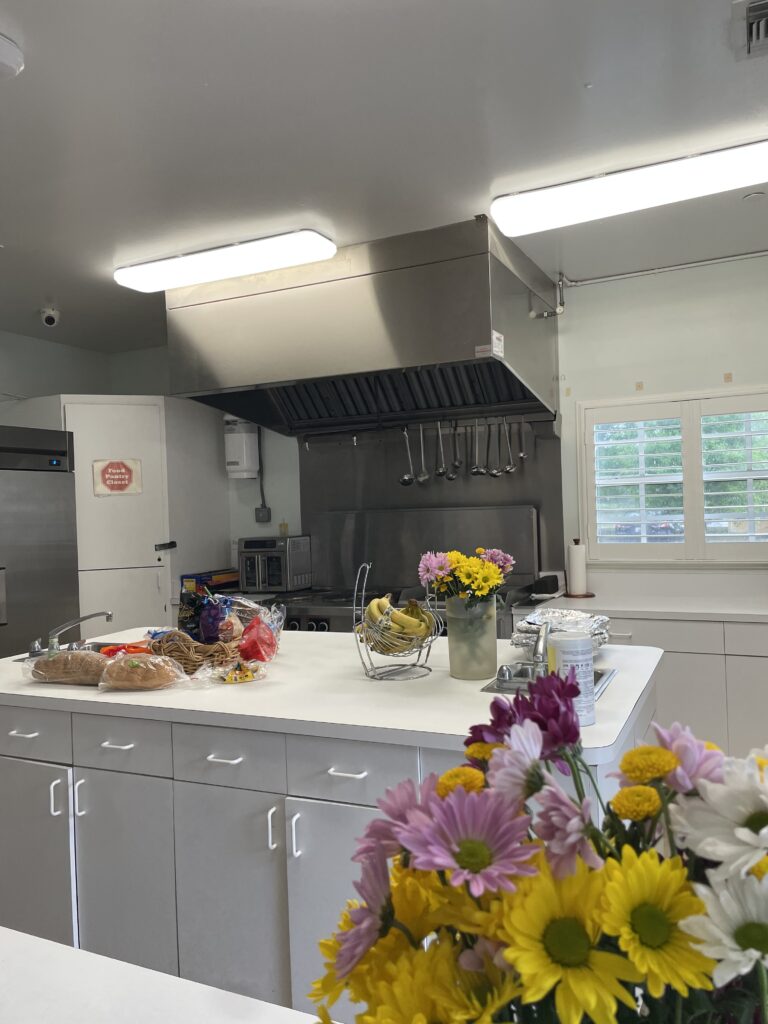
The center, which can house a maximum of nine families at a time, has helped more than 2,000 people since it opened in 1992. Dormitory-style living provides families with private bedrooms, while living room, kitchen, bathrooms, laundry facilities and a children’s playground are shared. With the help of volunteers, the center serves three meals a day.
A safe place to live is paramount, but as Program Development and Relationship Manager Renee Birely explains, “We are not just a shelter, we’re a program.” Families seeking help participate in an assessment prior to moving in which includes a background check and mental health screening to ensure the wellbeing of the full community.
Once enrolled, participants are required to obtain full-time employment and save 75% of their earnings. Job training and career services are available through partnerships with United Against Poverty and Indian River State College. Weekly individual counseling as well as life skills training on topics including positive parenting, health and safety, and financial management help participants heal from past trauma and take steps toward a stable future.
Every family has a personalized plan to help them move from crisis to independence. The Arizona Self-Sufficiency matrix, a widely used, outcome-based evaluation tool, helps document a family’s progress through the program. It measures key indicators of stability, such as income, employment, housing, childcare and more on a scale of one to five. As an example, a family might begin with a score of one when they have no income, and progress to three when they can “meet basic needs with subsidy,” or to four when they can meet basic needs without assistance. A score of five indicates sufficient income to meet needs while allowing for both discretionary spending and saving.
As participants move through the center’s four-tiered program, they begin to make small rent payments. In addition to the dignity that comes with growing independence, these payments also create a stable payment history. The center can then document this history when a participant begins seeking independent housing. After a family leaves the center, typically after six to nine months, counselling services remain available for an additional two years.
The combination of support and responsibility is working. Wayne reports that 90% of participants who complete the full program remain housed five years after leaving the center. Community partnerships are vital to that success. Wayne describes United Against Poverty and Hope for Families Center as “crucial collaborators,” as well as the School District of Indian River County and, she adds, “Thank God for Habitat!” Funding from private donors, Indian River Hospital District, and Indian River County’s Children’s Services Advisory Committee (CSAC) all provide vital financial support. Safe Families for Children supports parents in the center with babysitting and transportation needs. As Birely explains, “It’s not going to be just one agency or program solving this affordable housing issue. It’s going to take everybody – everybody has a little piece of the puzzle.”
Over her twenty years of involvement in the Catholic Charities network, Wayne has seen housing needs evolve. It’s no longer just pregnant women or single mothers who seek assistance; the center is seeing more single fathers and grandparents who have custody of their grandchildren. She also reports seeing multi-generation families where the grandparents, parents, and older children are all employed and their pooled income still isn’t enough to meet their basic needs.
The current gap between incomes and housing prices in Indian River County ensures a steady pipeline of people needing assistance. Program Development and Quality Director Carol Rodriguez says that many of the people coming to the center “have been working and they’re continuing to work, but the bills and expenses are just overwhelming … and then they find themselves couch surfing.” She adds, “There’s just a lot more of that since Covid.” Wayne agrees. “People don’t understand,” she says, “that there is a preponderance of folks at or just below the surface.”
For those folks, a place like The Samaritan Center can mean the difference between drowning or making it to solid ground. “When they come in here, they really have been beaten down,” Birely says. “You can imagine being a mom, driving around in your car and wondering where you’re going to get your next meal from, where you’re going to spend the night.” She adds, “We want to give them the first month to just take a breath.”
And then they get busy. The center that seemed so quiet in the morning will be humming with life by late afternoon, as children tumble in from school, and their parents return from a day spent working and learning. “Helping the poor and vulnerable is our mission,” Birely says. “Our business is helping families be healthy and stable and thriving. We really want to see them thriving.”
For homeless families in need, The Samaritan Center provides more than transitional housing. It is a good neighbor that offers them an opportunity to transform their lives.